You have found two properties that could work. One is ready to inspect. The other exists as drawings, specifications and a proposed programme. How do you compare them fairly?
Start by recognising that “new build” describes more than one situation. A newly completed home and a home purchased before construction offer different levels of visibility. The useful distinction is what exists today and what still needs to be delivered.
Neither option is automatically right for every buyer. Your timing, priorities and tolerance for uncertainty should shape the comparison. Use the following questions to work out where each property fits.
Start with your actual moving date
Write down when you need access to a home. Then distinguish a preferred date from a deadline you cannot easily change.
An existing home may fit a shorter timetable, depending on availability and settlement terms. A proposed residence requires closer attention to the delivery programme and contractual arrangements.
Think through what a delay would mean for your household. Would you extend a tenancy, store furniture or change travel plans? Including those possibilities in your comparison makes the decision more realistic before you become attached to a particular property.
Compare what you can inspect
In a completed home, you can walk between rooms, look through windows and stand on the terrace. You can test furniture positions and observe how the spaces connect.
With a proposed residence, much of that assessment happens through drawings and specifications. Ask for room dimensions and consider how your furniture would fit. Look carefully at door swings, storage and circulation.
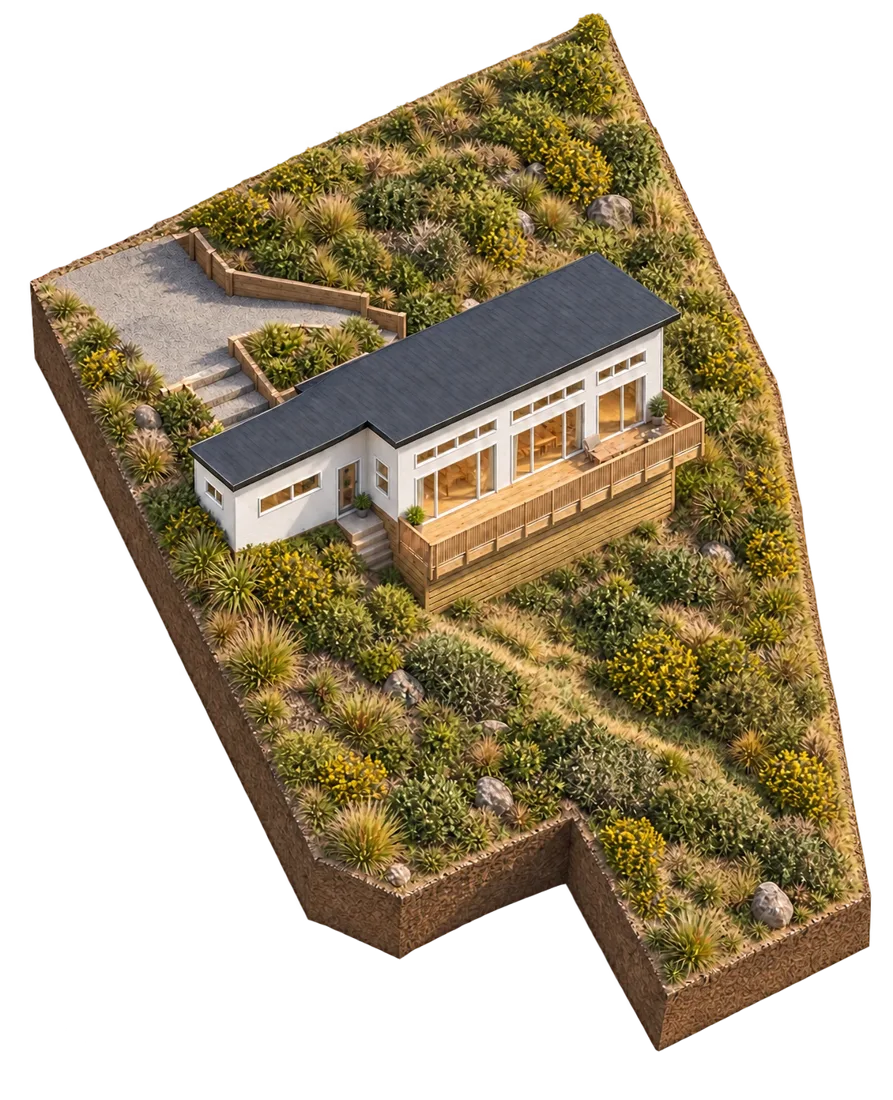
A render can help you imagine the setting. Keep it beside the written specification rather than allowing it to answer questions the documents should address.
Ask what can actually be changed
One attraction of an unbuilt home is the possibility of influencing its details. That possibility should be confirmed rather than assumed.
Ask which choices remain open, when decisions are needed and how variations are priced. A request to move a wall is different from choosing a finish. Both may affect the programme or agreement.
For a completed home, list the alterations you would want and seek suitable advice about feasibility. Compare the cost and disruption of those changes with the options genuinely available in the proposed home.
Look closely at what the price includes
Two headline prices can cover different things. Make a side-by-side list of inclusions before deciding that one represents better value.
Ask about appliances, floor coverings, landscaping and outdoor areas. Identify anything illustrated in marketing material that is not included in the agreement. Record any items that still need a selection or allowance.
This is also a useful moment to separate essentials from additions you would enjoy. A clear inclusions list helps you assess the home you would receive rather than the version you have imagined.
Understand the agreement before signing
For an off-plan purchase, your lawyer should explain the clauses governing delivery, changes and settlement. Ask about the deposit arrangements and what happens if key milestones are not met.
For an existing home, the agreement still needs careful review. Conditions, chattels and the intended possession arrangements should reflect the transaction you expect.
Settled’s guide to property options introduces buying off the plan. Use it to prepare questions, then obtain advice on the specific contract rather than relying on a general checklist alone.
Review the building evidence
A completed home is available to inspect, but presentation does not settle every question about its condition or documentation. Ask which reports and approvals are available and arrange appropriate independent advice.
For a proposed home, request the current drawings, specification and consent information. Ask how progress will be documented and how the finished property will be checked before handover.
Keep a simple register of the documents you receive. Note their dates and any outstanding questions so that earlier versions do not become confused with the current proposal.
Compare the surroundings as well as the rooms
A home can be finished while the wider development continues. Ask what work may remain nearby and how access will operate during that period.
For either option, consider the route from parking to the entrance, the outdoor spaces and the relationship with neighbouring properties. If shared areas are involved, ask for the arrangements that explain their use and maintenance.
Your decision concerns daily life as much as architecture. Imagine a normal weekday, a visit from friends and the practical tasks you will repeat every week.
Make room for the costs around the purchase
Ask your advisers to help you build a complete cost picture. Consider finance arrangements, insurance and the costs of moving. For an uncompleted property, discuss how your financing would work across the expected timetable.
For a completed home, include any immediate work you want to undertake. For a proposed home, include choices or extras that sit outside the agreed price.
Avoid assuming that one category must be cheaper to own. Compare the actual properties and the evidence available for each rather than broad labels.
Choose the option that fits your priorities
Give each property a short written assessment under timing, layout, documents and total cost. Add the unanswered questions before making your decision.
At TANEMA, the completed Harbour House provides a physical reference while the remaining residences form the next development chapter. Their status and purchase terms should be reviewed individually.
Explore the residence options, read the estate FAQs and request the documents for the opportunity that interests you. The aim is a choice you can explain clearly, supported by information you have actually reviewed.